
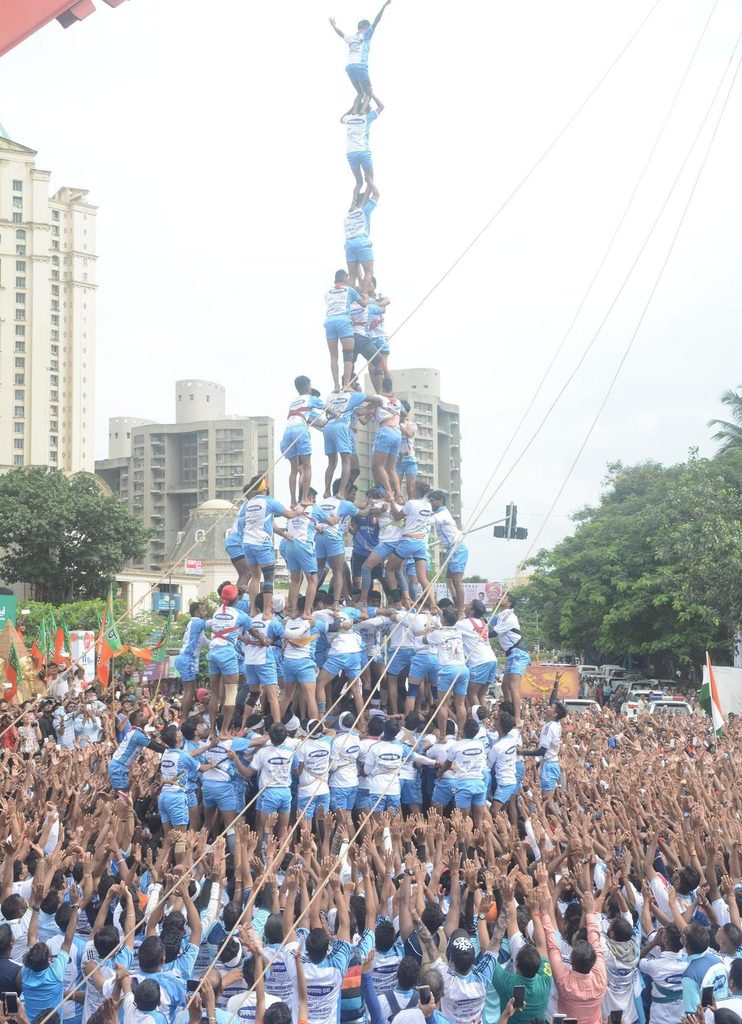
Janmashtami across Vadodara brings unmatched energy—from lively temple darshans in Mandvi and Alkapuri to high-stakes Dahi Handi human pyramids organized by local youth groups across Subhanpura and Gorwa.
While the spirit of celebration runs high, human pyramids, slippery monsoon roads, and hours of standing in crowded queues place massive biomechanical stress on the body. Every year during this festive weekend, orthopaedic clinics see an influx of preventable sprains, disc herniations, ligament tears, and fall-related fractures.
Whether you are scaling pyramids as a Govinda or visiting temples with family, here is your complete orthopaedic guide to celebrating safely this Janmashtami.
1. Safety for Govindas: Protecting Knees, Shoulders, and Spine
Forming a multi-tier human pyramid requires serious athletic conditioning. The base participants often bear several hundred kilograms of dynamic load, while climbers face high risks of sudden twists, slipping, and hyperextension.
- Warm-Up Thoroughly: Never step into a pyramid cold. Spend 15 minutes doing dynamic hamstring stretches, shoulder rotations, calf raises, and core activation exercises. Cold muscles and stiff ligaments tear far more easily under sudden loads.
- Master Base Posture: Base-tier participants must distribute weight across the pelvic girdle and thighs—not the lower back. Keep the core braced, feet firmly planted hip-width apart, and avoid arching the lumbar spine.
- Protect the Shoulders: Upper-tier climbers frequently suffer rotator cuff strains and AC joint separations from abrupt pulling forces. Maintain a secure grip with wrists straight; avoid overreaching with an externally rotated arm.
- Surface Grip & Footwear: Monsoon dampness makes road surfaces extremely slick. Ensure the landing perimeter is cleared of debris and consider non-slip footwear or proper traction mats where permitted.
If you participate in competitive athletics or high-impact festive sports, review our guide to comprehensive sports medicine care in Vadodara to learn how targeted conditioning prevents chronic ligament trauma.
2. Temple Darshan & Queue Safety for Seniors and Families
Festive injuries are not limited to youth forming pyramids. Hours of static standing in long temple queues or walking barefoot on hard, damp marble floors can trigger acute flare-ups of degenerative joint issues.
- Support Existing Joint Conditions: For individuals living with knee osteoarthritis or chronic lumbar stiffness, prolonged standing causes joint capsule compression and fluid buildup. Wear supportive footwear with adequate arch cushioning right up to the shoe-stand area.
- Shift Weight Dynamically: Avoid locking your knees straight when standing in line. Alternate shifting your weight between feet every couple of minutes, or gently lift your heels to promote venous blood return from the lower legs.
- Avoid Sudden Jerks in Crowds: Sudden surges in packed temple halls can throw you off balance, causing ankle inversion sprains or lumbar disc irritation. Keep a wide stance for balance and hold handrails when climbing stairs.
Suffering from persistent knee stiffness after long standing? Learn how modern joint replacement and arthroscopy treatments help restore pain-free, active mobility.
3. First-Aid Protocol: What to Do If an Injury Happens
If someone suffers a slip, direct fall, or awkward twist, immediate and correct first aid prevents secondary tissue damage:
| Injury Sign | Likely Issue | Immediate Action |
| Rapid joint swelling with a “pop” sound | ACL / Meniscus / Ligament Tear | Immobilize the joint immediately. Do not attempt to walk or bear weight. |
| Inability to move limb / visible deformity | Bone Fracture or Joint Dislocation | Splint the limb as-is; do not try to “straighten” or pull the bone. Apply ice wrapped in cloth. |
| Sharp radiating pain down the leg or arm | Acute Spine / Disc Nerve Impingement | Keep the spine flat and aligned; avoid bending forward or twisting the torso. |
Follow the P.R.I.C.E. Protocol for Soft Tissue Sprains:
- Protect: Shield the injured area using a splint, brace, or sling.
- Rest: Stop activity immediately. Continued walking or weight-bearing converts a partial tear into a complete rupture.
- Ice: Apply cold packs wrapped in a thin towel for 15–20 minutes every 2 hours to limit deep swelling. Never apply ice directly onto bare skin.
- Compress: Use an elastic crepe bandage with snug, even tension—not tight enough to cut off circulation.
- Elevate: Keep the injured limb elevated above heart level whenever sitting or lying down.
Emergency Trauma and Orthopaedic Care in Vadodara
While festive spirit brings the community together, quick medical response makes all the difference when accidents occur. Do not dismiss severe joint swelling, numbness, or unbearable bone pain as a simple sprain—early diagnostic X-rays or MRI evaluations prevent long-term joint instability.
At Ortho Care Hospital, Dr. Sandeep Chauhan and our specialized team provide comprehensive care ranging from emergency fracture trauma management to advanced arthroscopy, spine care, and sports rehabilitation.
Contact & Location Details:
- Hospital: Ortho Care Hospital
- Lead Consultant: Dr. Sandeep Chauhan (Medical Director & Consultant Orthopaedic Surgeon)
- Address: 2nd Floor Sharnam Enclave, Above Kotak Bank, Subhanpura Main Road, New IPCL Road, Vadodara, Gujarat – 390023
- Emergency & Appointments: 093289 74527
- Website: www.orthocarehospital.in
- Google Maps Profile: Find Us on Google Maps