
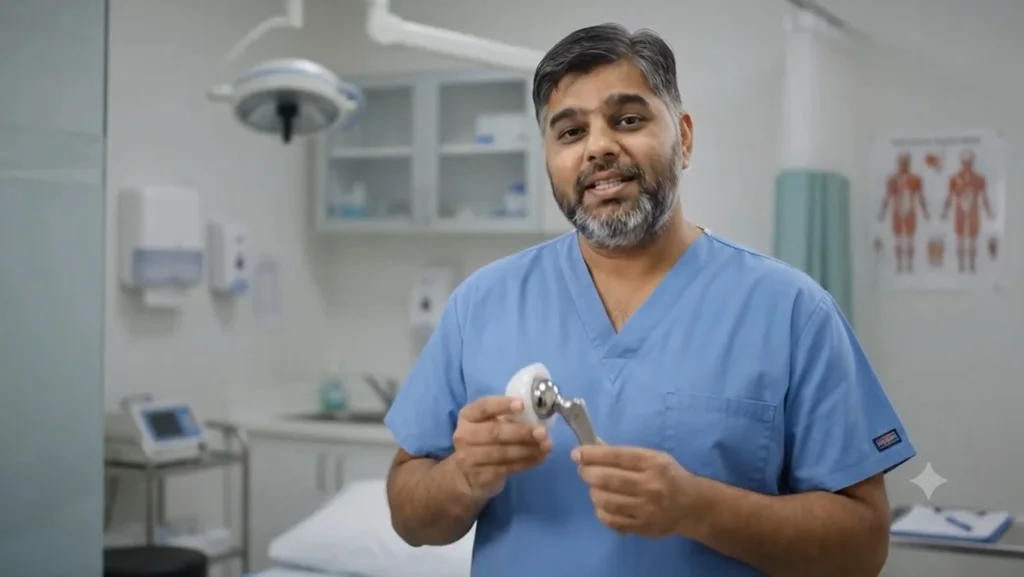
Ortho Care Hospital offers advanced hip replacement surgery vadodara residents can trust to restore full mobility and eliminate chronic joint pain. Led by Dr. Sandeep Chauhan, a premier THR surgeon in Subhanpura, our orthopedic clinic specializes in minimally invasive hip replacement to ensure rapid recovery and excellent long-term outcomes. We provide targeted therapies for conditions ranging from severe osteoarthritis to specialized avascular necrosis hip treatment. While the hip joint implant cost varies based on the advanced materials chosen, our priority is providing transparent, world-class surgical care. Most of our patients can stand and walk within 24 hours of their procedure, allowing them to reclaim their active lifestyles swiftly.
Key Takeaways
- Minimally Invasive Techniques: A minimally invasive hip replacement utilizes smaller incisions, which minimizes muscle disruption and drastically accelerates the healing timeline.
- Targeted AVN Care: We offer comprehensive avascular necrosis hip treatment for patients experiencing restricted blood flow to the femoral head, utilizing joint preservation in early stages and arthroplasty for advanced stages.
- High-Durability Implants: We use state-of-the-art titanium, ceramic, and highly cross-linked plastic components to maximize the lifespan of your new hip joint.
- Expert Surgical Care: Dr. Sandeep Chauhan is recognized as an expert THR surgeon in Subhanpura, leading a multidisciplinary team dedicated to clinical excellence.
- Rapid Rehabilitation: Immediate post-operative mobilization and multimodal pain management reduce complications and speed up your return to daily activities.
1. The Impact of Hip Pain and the Solution of THR
The hip is one of the body’s largest weight-bearing joints, heavily relied upon for basic movements such as walking, sitting, bending, and turning. When chronic hip pain sets in, it can transform a vibrant, active life into a restricted and painful existence. Simple daily tasks like tying your shoes, getting out of a chair, or walking up a flight of stairs can become incredibly difficult.
Total Hip Replacement (THR), also known as total hip arthroplasty, is one of the most successful and transformative operations in all of modern medicine. During a total hip replacement, the damaged bone and cartilage of the hip joint are surgically removed and replaced with artificial prosthetic components. The primary goals of this procedure are to provide profound pain relief, improve the function of the hip, and allow patients to return to the activities they love.
At Ortho Care Hospital, we approach hip replacement not just as a surgical procedure, but as a holistic journey back to wellness. From the moment you step into our clinic to your final postoperative physiotherapy session, our goal is to empower you with the knowledge, surgical precision, and rehabilitative support you need to succeed.
2. Anatomy of the Hip Joint
To understand why a hip replacement is necessary, it is helpful to understand how the normal hip joint functions. The hip is a “ball-and-socket” joint.
- The Socket: The socket is formed by the acetabulum, which is a part of the large pelvis bone.
- The Ball: The ball is the femoral head, which is the upper end of the femur (thighbone).
In a healthy hip, the bone surfaces of the ball and socket are covered by articular cartilage. This is a smooth, white tissue that cushions the ends of the bones and enables them to move and glide easily across one another with minimal friction. A thin tissue called the synovial membrane surrounds the hip joint; this membrane produces a small amount of fluid that lubricates the cartilage and virtually eliminates friction during movement.
When a patient suffers from arthritis or a severe hip injury, this protective cartilage is worn away. Without this cushioning, the bones begin to rub directly against each other (bone-on-bone friction), resulting in severe pain, bone spurs, and stiffness that severely limits a person’s range of motion.
3. Common Conditions Requiring Hip Replacement
A total hip replacement is typically recommended when joint damage is severe and non-surgical treatments—such as physical therapy, weight management, anti-inflammatory medications, or walking aids—no longer provide adequate pain relief. The most common conditions leading to the need for a hip replacement surgery Vadodara patients face include:
Osteoarthritis of the Hip
Osteoarthritis is an age-related “wear and tear” type of arthritis that most commonly affects adults aged 50 and older, as well as individuals with a family history of the disease. In patients with osteoarthritis of the hip, the cartilage cushioning the bones of the hip wears away, causing the bones to rub together, leading to debilitating pain and stiffness. The American Academy of Orthopaedic Surgeons (AAOS) maintains strict clinical practice guidelines to ensure evidence-based management for adult patients (ages 18 years and older) who have been diagnosed with osteoarthritis of the hip.
Rheumatoid Arthritis
Rheumatoid arthritis is an autoimmune disease wherein the synovial membrane becomes highly inflamed and thickened. This chronic inflammation can eventually damage the cartilage, leading to pain, stiffness, and ultimately the destruction of the hip joint itself.
Avascular Necrosis (AVN) of the Femoral Head
Avascular necrosis (also known as osteonecrosis) occurs when the blood supply to the femoral head is severely disrupted. Without adequate nourishment, the bone tissue dies, and the femoral head may eventually collapse. Avascular necrosis hip treatment depends heavily on the stage of the disease and whether the articular surface has collapsed.
- Pre-Collapse Stage: If diagnosed early, non-operative treatments or joint-preserving surgeries like core decompression (drilling into the femoral head to decrease pressure and increase blood flow) can be highly effective for small to medium-sized lesions. Off-label conservative therapies have included vasodilators (to decrease intraosseous pressure), statins (to decrease the differentiation of stem cells into fat cells), and anticoagulants, though intra-articular steroid injections are not recommended as they can cause significant worsening of the necrosis.
- Post-Collapse Stage: If left untreated, femoral head necrosis may lead to subchondral fractures in as little as 2 to 3 years. Once femoral head collapse has occurred, or if there is acetabular involvement, core decompression is no longer indicated, and total hip arthroplasty (THR) becomes the primary reconstructive intervention required to restore joint function.
Hip Fractures and Trauma
Severe trauma or fractures of the hip joint can lead to a condition known as post-traumatic arthritis. Over time, the damaged cartilage breaks down, leading to hip pain and stiffness. Hip fractures are especially common in older adults and often require immediate surgical intervention. Depending on the nature of an unstable femoral neck fracture, orthopaedic surgeons may opt for fixation or arthroplasty (including unipolar or bipolar hemiarthroplasty) to restore the patient’s mobility safely.
4. The Total Hip Replacement Procedure Explained
Dr. Sandeep Chauhan, a leading THR surgeon in Subhanpura, utilizes meticulous preoperative planning to map out the exact size and position of the artificial joint components prior to surgery.
Minimally Invasive Hip Replacement
Whenever anatomically possible, Dr. Chauhan employs a minimally invasive hip replacement approach. Unlike traditional hip replacement surgery, which requires a long incision and the cutting of muscles to access the joint, minimally invasive techniques use smaller incisions (usually 3 to 6 inches) and involve moving muscles aside rather than severing them. This muscle-sparing technique generally leads to less postoperative pain, shorter hospital stays, and a more rapid return to daily activities.
Step-by-Step Surgical Process
During a total hip replacement, the damaged joint is systematically removed and replaced with prosthetic components in the following manner:
- Preparation of the Femur: The damaged femoral head (the ball) is removed, and the hollow center of the femur is prepared. A metal stem is then inserted into the femur; this stem may be either cemented in place or “press-fit” into the bone so that natural bone can eventually grow onto it.
- Placement of the New Ball: A highly polished metal or ceramic ball is securely placed on the upper part of the stem, perfectly replacing the damaged femoral head that was removed.
- Preparation of the Acetabulum: The damaged cartilage surface of the hip socket (the acetabulum) is removed. It is then replaced with a durable metal socket; occasionally, screws or specialized medical cement are used to hold the socket firmly in place.
- Inserting the Liner: Finally, a plastic, ceramic, or metal spacer (called a liner) is inserted between the new prosthetic ball and the socket. This liner acts as the new cartilage, allowing for a remarkably smooth gliding surface and frictionless joint movement.
5. Total Hip Replacement Cost in Vadodara & Implant Materials
When considering hip replacement surgery in Vadodara, understanding the overall hip replacement cost is a primary concern for patients and families. The total cost typically depends on the patient’s bone condition, choice of implant bearing surface, room type, and length of hospital stay.
| Hip Replacement Component / Option | Implant Bearing Type | Indicative Vadodara Range (INR)* | Key Features |
| Standard THR | Metal-on-Polyethylene | ₹1,40,000 – ₹1,80,000 | Proven track record, highly cost-effective |
| Advanced Wear-Resistant | Ceramic-on-Polyethylene | ₹1,80,000 – ₹2,30,000 | Lower friction, ideal for middle-aged patients |
| Premium High-Performance | Ceramic-on-Ceramic | ₹2,30,000 – ₹2,90,000+ | Lowest wear rate, optimal for young, active adults |
*Note: Figures are estimated averages. Actual hip replacement surgery cost varies based on medical evaluation, required investigations, and insurance pre-authorizations.
6. Comprehensive Recovery Timeline
Recovery from a minimally invasive hip replacement is a structured, gradual process. Adhering to your physical therapy guidelines is crucial for regaining full strength and maximizing the lifespan of your new hip.
Hospital Stay and Early Mobilization
Patients typically remain in the hospital for 1 to 2 nights following their procedure. Early mobilization is a key component of our prevention program. You will likely be asked to stand and begin walking with the aid of a walker or crutches within hours of waking up from surgery. This early movement is critical to prevent stiffness and reduce the risk of postoperative complications.
Managing Postoperative Pain
Pain management has evolved significantly. Rather than relying solely on heavy narcotic medications, Ortho Care Hospital uses a multimodal pain management protocol. This includes a combination of local anesthetics injected directly into the joint during surgery, nerve blocks, anti-inflammatory medications, and acetaminophen. This approach keeps you comfortable while minimizing side effects like nausea or grogginess.
Resuming Daily Activities
- Weeks 1 to 3: You will rely on a walker or cane for balance. Physical therapy will focus on strengthening the muscles around your hip and improving your range of motion.
- Weeks 4 to 6: Many patients can discontinue the use of walking aids and begin to walk independently. Driving may generally be resumed within 4 to 6 weeks, provided you are no longer taking narcotic pain medications and have regained the reflexes necessary for safe braking.
- Long-Term Activity Restrictions: A total hip replacement is designed to allow you to return to the activities you love. Realistic activities following a total hip replacement include unlimited walking, swimming, hiking, driving, dancing, biking, golf, and other low-impact sports. However, because extreme stress can accelerate the wear of the artificial joint components, most orthopaedic surgeons strongly advise against high-impact activities such as jogging, running, jumping, or intense high-impact sports.
The Ortho Care Hospital Recovery Table
| Post-Op Phase | Expected Milestones & Activities |
| Day 0 – 2 (In Hospital) | Stand and walk with assistance; learn stair navigation; initiate ankle pump exercises. |
| Week 1 – 2 (At Home) | Walk with a walker/cane; perform daily physical therapy exercises; manage incision care. |
| Week 3 – 6 | Discontinue walking aids (as advised); resume driving (if reflexes permit); return to desk work. |
| Month 3 and Beyond | Resume low-impact sports (swimming, biking, golf); experience full pain relief and restored mobility. |
7. Preventing Complications After THR
While total hip replacement is exceptionally safe, as with any major surgery, there are potential risks. The team at Ortho Care Hospital takes comprehensive measures to minimize these risks, but patient compliance is equally vital.
Preventing Blood Clots
Blood clots in the leg veins are a potential complication following surgery. To reduce the risk of blood clots developing during the first several weeks of your recovery, your orthopaedic surgeon will outline a prevention program that may include blood thinners (medications that thin the blood), inflatable leg coverings, support stockings, ankle pump exercises, and early mobilization. It is imperative that you follow your surgeon’s instructions carefully. You should notify your doctor immediately if you develop warning signs of a possible blood clot in your leg, which include pain in your calf and leg that is unrelated to your incision, tenderness or redness of your calf, or new or increasing swelling of your thigh, calf, ankle, or foot. If a clot travels to your lung (pulmonary embolism), warning signs include sudden shortness of breath, sudden onset of chest pain, and localized chest pain with coughing.
Preventing Infection
A common cause of infection following hip replacement surgery is bacteria that enter the bloodstream during urinary tract infections, skin infections, or routine dental procedures. Following surgery, patients with certain risk factors may need to take antibiotics before any surgical procedure that could allow bacteria into the bloodstream, or before having dental work, including routine dental cleanings. Your orthopaedic surgeon will discuss whether you need to take preventive antibiotics before dental procedures. Notify your doctor immediately if you develop warning signs of a possible hip replacement infection, such as chills, a persistent fever higher than 100°F orally, drainage from the hip wound, increasing redness, tenderness, or swelling of the hip wound, or increasing hip pain with both activity and rest.
Avoiding Falls and Following Precautions
A fall during the first few weeks after surgery can damage your new artificial hip and may result in the need for more surgery. Stairs are a particular hazard until your hip becomes strong and mobile. To protect your joint, you should use handrails, a walker, crutches, a cane, or have someone assist you until you have significantly improved your balance, strength, and flexibility. Your orthopaedic surgeon and physical therapist will help you decide which assistive aides are required following surgery and when they can be safely discontinued.
Furthermore, to ensure proper recovery and prevent dislocation of the prosthesis, you may be asked to take special precautions when sitting, bending, sleeping, or during sexual activity, usually for the first 6 weeks after surgery. These precautions will vary depending on the specific surgical approach your surgeon used to perform your hip replacement.
8. Why Choose Ortho Care Hospital in Vadodara?
Choosing the right facility for your hip replacement surgery Vadodara is a critical decision. At Ortho Care Hospital, we pride ourselves on delivering a standard of care that matches premier international facilities, right here in the heart of Gujarat.
- Expert Leadership: Our clinic is owned and operated by Dr. Sandeep Chauhan, an esteemed THR surgeon in Subhanpura, ensuring that your entire care pathway is directed by a highly experienced orthopaedic consultant and medical director.
- Comprehensive Facilities: Located conveniently at the 2nd Floor of Sharnam Enclave, Above Kotak Bank, New IPCL Road, Subhanpura Main Road, Vadodara, 390023, our hospital is equipped with state-of-the-art diagnostic imaging, advanced laminar airflow operation theatres, and dedicated rehabilitation zones.
- Holistic Healing Environment: We focus not just on the surgery, but on your overall wellness. Our in-house pharmacy ensures prompt access to medications, while our dedicated physical therapy team works intimately with you to guarantee a robust recovery.
- Accessibility and Support: We provide clear, continuous communication throughout your journey. To schedule your consultation, simply call us at 093289 74527 or visit our official website at https://www.orthocarehospital.in/.
9. Frequently Asked Questions (FAQs)
What is the ideal age for a hip replacement?
There is no strict age limit or absolute age restriction for total hip replacement. Recommendations are based on a patient’s pain level and disability, not simply their age. While most patients undergoing THR are between 50 and 80 years old, teenagers with juvenile arthritis or AVN, as well as elderly patients, are routinely evaluated on an individual basis.
Can Avascular Necrosis (AVN) be treated without surgery?
If caught in the very early “pre-collapse” stages, conservative avascular necrosis hip treatment can occasionally delay disease progression. This may include off-label use of vasodilators, statins, or restricted weight-bearing protocols to reduce intraosseous pressure and promote blood flow. However, AVN is a progressive condition, and once the femoral head collapses, arthroplasty (hip replacement) is generally indicated.
Will I need a blood transfusion during the operation?
With the advent of minimally invasive hip replacement techniques and the use of tranexamic acid (a medication given during surgery to minimize bleeding), the need for blood transfusions has decreased dramatically. The vast majority of our patients at Ortho Care Hospital do not require a transfusion.
How do I prepare my home for recovery?
Before you undergo surgery, it is wise to make minor modifications to your living space. Remove loose rugs or electrical cords that could pose tripping hazards. Place frequently used items at waist height so you do not have to bend down or reach up high. Setting up a sturdy chair with a firm seat cushion and armrests is also highly recommended.
Is physical therapy mandatory after surgery?
Yes, physical therapy is absolutely essential. While the surgery corrects the structural issue within the joint, physical therapy is required to strengthen the surrounding muscles that have likely weakened due to prolonged arthritis pain. Consistent participation in your rehabilitation program is the key to achieving the best possible functional outcome.
What factors influence the total hip joint implant cost?
The primary driver of the hip joint implant cost is the material of the prosthesis (e.g., standard metal-on-polyethylene vs. premium ceramic-on-ceramic bearings). Other variables include the duration of the hospital stay, the surgical approach required, and the specific patient room category chosen. Dr. Chauhan’s team provides comprehensive counseling regarding all financial aspects during your surgical planning phase.
What is included in the hip replacement cost at Ortho Care Hospital?
The total hip replacement surgery cost generally includes the pre-operative planning, surgeon and anesthetist fees, operating theater and laminar airflow facility charges, the prosthetic implant, hospital room stay, post-op nursing care, and initial in-hospital physical therapy. We provide transparent billing with full cashless TPA insurance support.
References:
- American Academy of Orthopaedic Surgeons (AAOS). Total Hip Replacement. Retrieved from: https://www.orthoinfo.org/treatment/total-hip-replacement/
- American Academy of Orthopaedic Surgeons (AAOS). Management of Osteoarthritis of the Hip. Retrieved from: https://www.aaos.org/quality/quality-programs/osteoarthritis-of-the-hip/
- American Academy of Orthopaedic Surgeons (AAOS). Management of Hip Fractures in Older Adults. Retrieved from: https://www.aaos.org/hipfxcpg
- National Center for Biotechnology Information (NCBI) – StatPearls. Femoral Head Avascular Necrosis. Retrieved from: https://www.ncbi.nlm.nih.gov/books/NBK546658/